Kolkata is a city where centuries-old cultural traditions coexist with technology, professional life, social media and rapidly changing lifestyles. Within this environment, Tantra continues to attract interest from people who want to understand traditional spiritual practices and their place in contemporary life.
If you are researching a Tantrik In Kolkata,it is useful to look beyond promotional claims and understand what Tantra means, why Bengal has such a significant historical connection with it, and how spiritual consultation is changing in the digital age.
This guide takes a balanced approach. It explores the historical and cultural dimensions of Tantra, the relationship between Kolkata and Shakta traditions, the influence of modern technology, and practical considerations for anyone considering spiritual consultation.
What Does Tantra Mean?
Tantra is not a single ritual or one standardized system. In academic literature, the term describes a diverse collection of Hindu and Buddhist religious and philosophical traditions that developed in South Asia over many centuries.
Depending on the tradition or lineage, Tantric practice may involve mantra, meditation, visualization, ritual, initiation, devotion, cosmology and disciplined spiritual practice. Because the traditions are diverse, reducing Tantra to “magic” or a single type of ritual gives an incomplete picture.
Modern popular culture has also created several simplified meanings of Tantra. Understanding the difference between historical traditions and modern commercial interpretations is therefore an important first step.
Why Is Kolkata Closely Associated With Tantra?
Kolkata and the wider Bengal region have a long cultural association with Shakta worship, devotional traditions and forms of Tantra. The history of Bengal Tantra has been studied in relation to religion, literature, social life and cultural development.
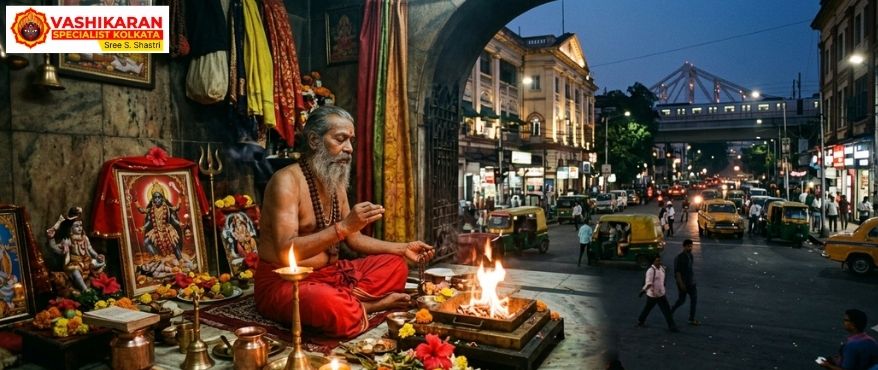
Kalighat is particularly important to Kolkata’s religious landscape. The temple is dedicated to Goddess Kali and is one of the city’s most prominent religious landmarks. The present temple structure dates to the early nineteenth century, although the sacred history of the site is considerably older.
This history helps explain why conversations about Tantra, Kali worship and spiritual practice remain culturally visible in Kolkata. It does not mean that every modern service marketed as “Tantric” is identical to historical Tantric traditions.
Tantra in Bengal: Tradition Rather Than a Single Formula
Bengal’s relationship with Tantra developed through different religious, literary and cultural contexts. Historical studies describe Tantra in Bengal as a broad tradition whose influence extended beyond isolated ritual practices.
This is important for modern readers because the word “Tantra” is frequently used online as if it describes one fixed method. In reality, practices, philosophies, deities, rituals and interpretations can differ significantly between traditions.
A responsible discussion of Tantra should therefore acknowledge diversity rather than presenting one practitioner’s approach as the universal definition of Tantra.
How Traditional Knowledge Fits Into Modern Lifestyle
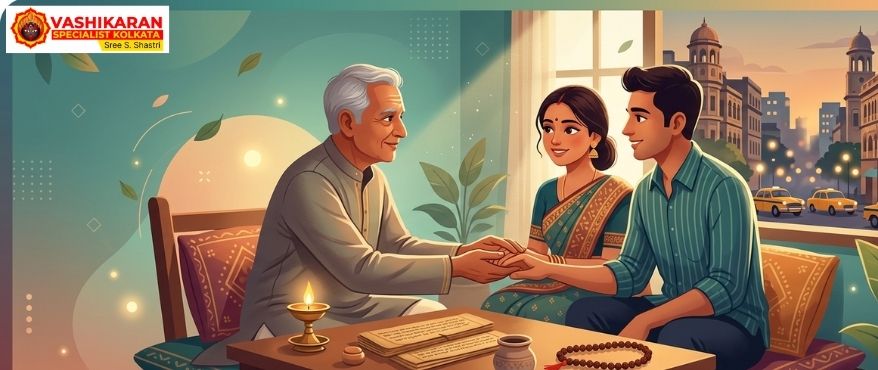
Modern life has changed the way people discover almost every form of knowledge, including religion and spirituality. A person may work in a technology-driven environment, communicate through messaging applications, shop online and still maintain family traditions, prayer practices or devotional routines.
Research on religion in India shows that religious practice remains important for
many people. At the same time, recent scholarship on digital religion describes an increasingly hybrid environment in which online and offline religious experiences interact.
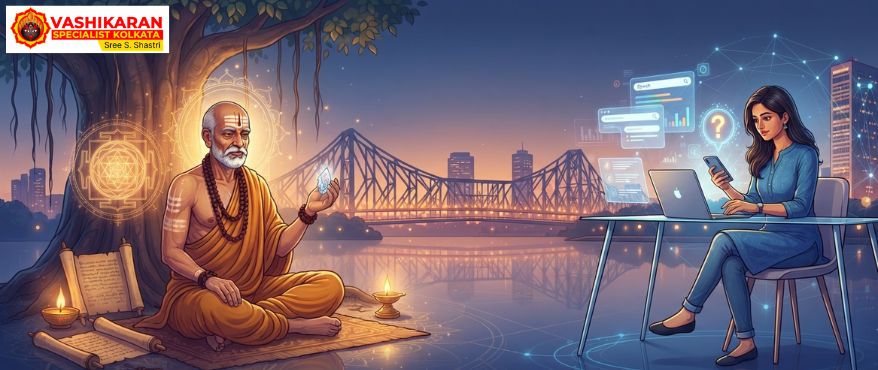
For spiritual traditions, this creates a new pattern: traditional ideas can now be
discovered through websites, videos, social media, online discussions and remote consultations, while physical temples, rituals and personal practices continue to exist offline.
From Temple Visits to Digital Spiritual Discovery
One of the most visible changes is accessibility. Earlier, someone interested in a
spiritual tradition might have depended primarily on family networks, local communities or personal introductions. Today, search engines and social platforms can introduce people to spiritual teachers and traditions within minutes.
This convenience also creates a responsibility. Online visibility does not automatically prove expertise, authenticity or effectiveness.
People researching a spiritual practitioner should distinguish between a practitioner’s own description of their services and independently verifiable historical or scientific information.
What Does a Modern Tantrik Consultation Look Like?
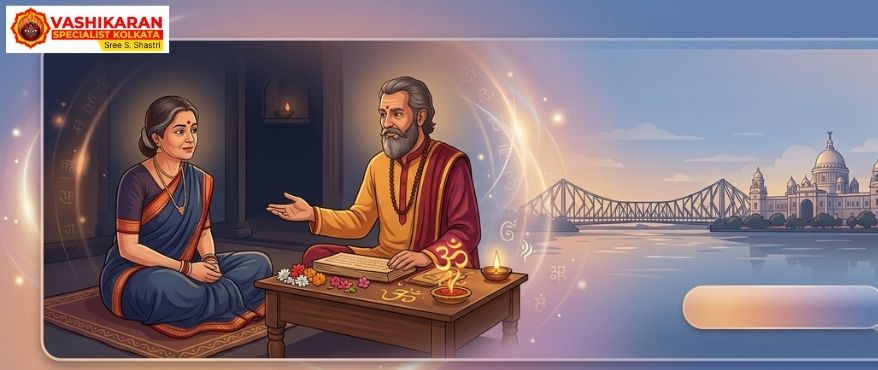
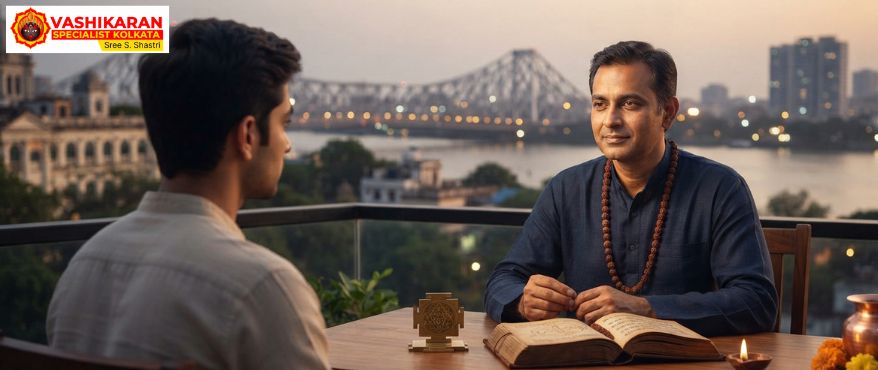
Contemporary spiritual consultation can take different forms. A practitioner may begin by listening to a person’s concerns, discussing their circumstances and explaining a traditional spiritual approach that they believe is relevant.
For Sree S. Shastri, the stated approach begins with understanding an individual’s
personal, relationship, marriage or career-related concern before discussing possible traditional spiritual guidance.
The purpose of a consultation should therefore be understood as guidance within a particular spiritual tradition rather than as a guaranteed mechanism for changing another person’s choices or controlling events.
Where Does Vashikaran Fit Into Modern Discussions?
Vashikaran is commonly discussed online in connection with attraction, relationships and spiritual practices. Different traditions and practitioners use the term in different ways, which makes context important.
In contemporary commercial content, Vashikaran is sometimes described using extraordinary claims about controlling another person’s thoughts or behaviour. Such claims should not be treated as scientifically established facts.
People interested in traditional spiritual consultation may therefore find it more
useful to focus on communication, personal reflection, cultural practice and informed decision-making rather than expecting a ritual to override another person’s autonomy.
If you are specifically researching traditional spiritual consultation, you can
learn more about the services described by a Powerful Vashikaran Specialist while keeping realistic expectations about what spiritual practices can and cannot establish scientifically.
Can Spiritual Guidance and Modern Practical Action Coexist?
Yes. For people who value spiritual traditions, spiritual practice can exist alongside ordinary practical action. The two do not have to be treated as mutually exclusive.
For example, someone experiencing a relationship problem may value prayer, meditation or spiritual consultation while also communicating openly with their partner and considering relationship counselling where appropriate.
Similarly, someone experiencing a financial or career problem can maintain personal spiritual practices while consulting qualified financial or career professionals.
The key distinction is between using spirituality as part of personal belief and
treating a spiritual claim as scientifically guaranteed.
Love, Marriage and Spiritual Consultation
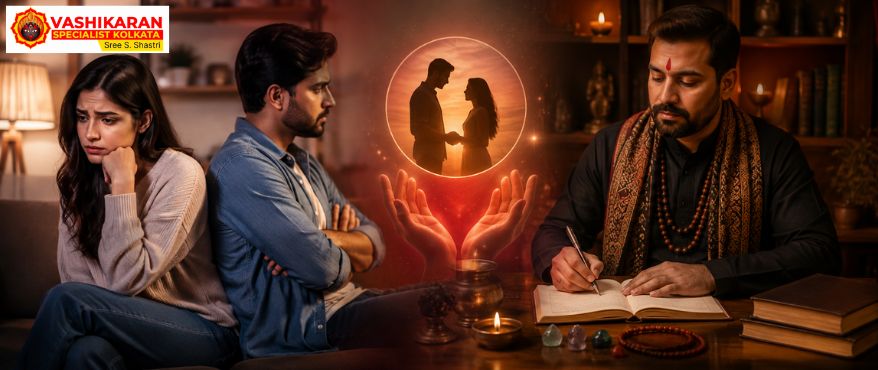
Relationship and marriage concerns are among the reasons people may seek spiritual guidance. Family disagreement, communication problems, emotional distance and uncertainty about marriage can be deeply personal experiences.
Someone exploring traditional guidance for marriage-related concerns can also research a Love Marriage Specialist in Kolkata.
However, a responsible consultation should respect the choices and consent of everyone involved. No spiritual practice should be presented as a guaranteed way to force another person to love, marry or remain with someone against their wishes.
Why Privacy Matters in Modern Spiritual Consultation
Relationship, marriage and family concerns can involve highly sensitive information. Privacy should therefore be an important consideration when choosing any spiritual consultant.
Before sharing photographs, identity documents, financial information or private conversations online, people should understand how their information will be handled.
A trustworthy consultation environment should encourage informed communication rather than pressure a person into making immediate financial or personal decisions.
How to Evaluate a Tantrik in Kolkata
Searching for a Tantrik in Kolkata should involve more than comparing claims made in search results. A thoughtful evaluation can include several practical factors.
1. Understand the practitioner’s stated tradition
Ask what type of spiritual or Tantric tradition the practitioner follows and how they describe their approach.
2. Look for clear communication
A practitioner should be able to explain the consultation process in understandable language rather than relying entirely on mysterious or frightening claims.
3. Avoid guaranteed-result promises
Be cautious when someone guarantees a specific supernatural outcome, promises an instant result or claims absolute control over another person’s behaviour.
4. Protect personal information
Share sensitive information carefully, particularly during online consultations.
5. Keep professional help in the picture
Medical, psychological, legal and financial problems require appropriately qualified professionals. Spiritual guidance should not be presented as a
replacement for those services.
6. Check whether the consultation feels respectful
Personal beliefs deserve respect, but consultation should also allow people to ask questions, consider alternatives and make their own decisions.
Modern Technology Has Changed Access, Not the Meaning of Evidence
The internet makes spiritual information easier to find, but it also makes it easier for unsupported claims to spread.
A professional-looking website, large social-media following or repeated testimonial does not independently establish that a supernatural claim is true. These can describe someone’s experience or marketing presentation, but they are not equivalent to controlled scientific evidence.
This distinction is particularly important when spiritual services are connected with health, financial loss, family conflict or emotional distress.
What Makes the Modern Kolkata Context Different?
Kolkata combines an urban professional environment with a strong cultural memory of religious traditions. The result is not necessarily a conflict between tradition and modernity.
Instead, many people can move between different modes of life: professional technology during the day, family traditions at home, online spiritual content on a smartphone and visits to religious spaces during festivals or important personal occasions.
This combination makes Kolkata an especially interesting setting for understanding
how traditional spiritual knowledge continues to be interpreted in contemporary India.
Traditional Knowledge Meets Modern Decision-Making
The modern approach does not require people to abandon their spiritual beliefs.
Instead, it encourages them to place those beliefs within a broader decision-making framework.
- Understand the tradition before accepting a claim.
- Separate belief from scientifically established evidence.
- Respect the autonomy and consent of other people.
- Protect personal and financial information.
- Use qualified professionals for medical, legal and financial matters.
- Consider spiritual consultation as guidance rather than guaranteed intervention.
- Make important personal decisions with patience rather than fear or pressure.
Why Tantra Remains Relevant in the Digital Age
Tantra remains relevant to modern audiences for several different reasons: historical interest, cultural identity, religious devotion, personal spirituality and the continuing search for meaning during periods of uncertainty.
The way people encounter these traditions is changing. Search engines, websites, video platforms and social media have created new routes into spiritual information, while physical temples, family traditions and personal practices remain important.
The most useful modern perspective is therefore neither to dismiss every traditional practice nor to accept every supernatural claim uncritically. It is to understand the tradition, recognize the limits of available evidence and make personal choices thoughtfully.
Frequently Asked Questions
What is Tantra?
Tantra refers to a diverse group of South Asian religious and philosophical traditions. Depending on the lineage, practices may include mantra, meditation, visualization, ritual, devotion and initiation.
Why is Kolkata associated with Tantra?
Kolkata and the wider Bengal region have a long cultural association with Shakta worship and Tantric traditions. Kalighat’s long religious history is an important part of Kolkata’s spiritual landscape.
Is Tantra the same as black magic?
No. Tantra is a broad category of religious and philosophical traditions and should not be reduced to black magic. Popular culture often uses the terms interchangeably, but academic descriptions of Tantra are much broader.
Is Vashikaran scientifically proven?
Claims that Vashikaran can supernaturally control another person’s thoughts, emotions or decisions are not scientifically established. Such practices are best understood in their traditional or personal-belief context.
Can spiritual consultation replace professional advice?
No. Spiritual consultation should not replace qualified medical, mental-health, legal, financial or other professional advice when those forms of expertise are required.
How should I choose a Tantrik in Kolkata?
Consider the practitioner’s stated tradition, experience, communication style, privacy practices and transparency. Avoid guaranteed-result promises, fear-based pressure and demands for unnecessary personal or financial information.
Can spiritual guidance be accessed online?
Yes. Digital platforms have made remote spiritual communication increasingly common. However, online accessibility does not independently verify a practitioner’s claims or qualifications.
Can traditional spiritual practices coexist with modern life?
Yes. Many people combine cultural or spiritual practices with contemporary professional, family and digital lifestyles. The important consideration is to understand what is tradition, what is personal belief and what has been scientifically established.
Final Thoughts
The story of the Tantrik in Kolkata is not simply a story about an ancient practice surviving in a modern city. It is also a story about how people reinterpret tradition as their lives, technology and information environment change.
Kolkata’s connection with Shakta and Tantric traditions provides an important cultural background, while modern digital platforms have created new ways for people to discover, discuss and seek guidance related to spirituality.
For anyone exploring Tantra today, informed curiosity is valuable. Learn about the tradition, ask questions, protect your privacy, distinguish belief from evidence and keep practical professional support available when necessary.
Sree S. Shastri provides traditional spiritual consultation for people who wish to discuss personal, relationship, marriage and related concerns. Any consultation should be approached as spiritual guidance within a traditional framework rather than as a guarantee of a particular supernatural outcome.